

What Is an AMA on Reddit and How to Host One Successfully
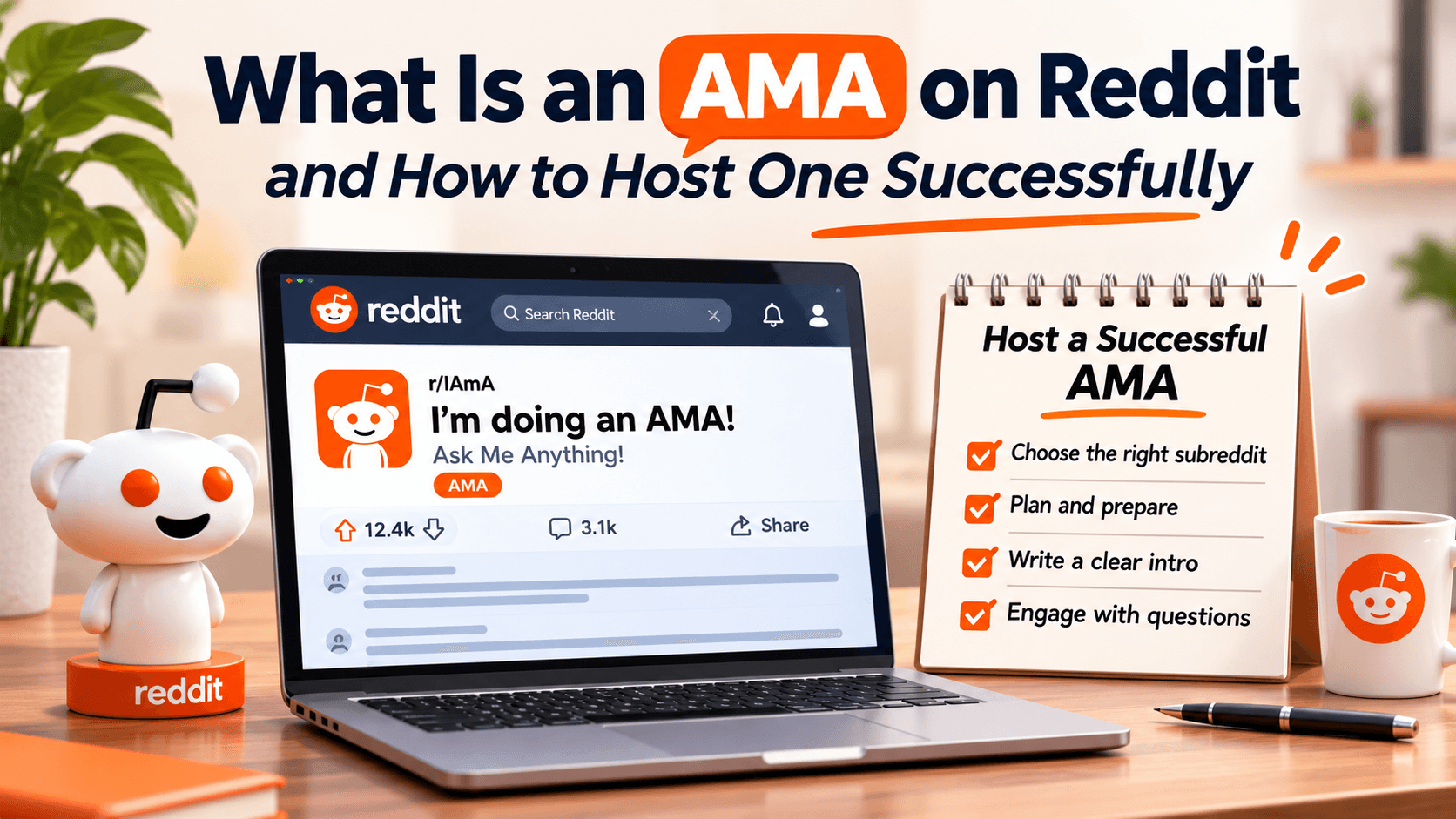
An AMA is Reddit's version of an open interview, the letters standing for Ask Me Anything. There is not much machinery to it. A person with some kind of interesting story opens a thread. The community fires off questions. The host sits in the comments for a few hours typing out answers. Barack Obama ran one back in 2012 while campaigning. Astronauts have done several. One of the most loved threads came from a guy who spent years working inside a theme park mascot costume and decided the internet should hear about it. No filter, no PR buffer, just a person and a few thousand questions.
From a distance, hosting looks simple. Up close, less so. The smooth ones took real preparation, most of it invisible, spread over the days before anything went live. The famous trainwrecks skipped something, a mod message here, a piece of proof there, and paid for it in front of thousands.
What AMA Actually Means
Ask Me Anything is the full phrase, though almost everyone sticks to the shorthand. Reddit's early years produced the phrase. Users with odd backgrounds would post lines like "I am a submarine cook, ask me anything," then spend an evening in the comments talking to strangers. By 2009 these threads were common enough that a dedicated community, r/IAmA, was set up to hold them.
The bones of the format are the same ones it had fifteen years ago. A host shows up with a short pitch for why this particular perspective is worth an hour of strangers' time, and from there the questions take over, unscripted from start to finish. Nobody vets what gets asked, either. That is the draw. A press release offers no cover when the top comment is about the one subject the host hoped to avoid.
How an AMA Session Works
Everything happens inside one Reddit post. The host puts up an introduction, attaches a photo or document as identity proof, and waits. Questions usually start landing within minutes. Replies land under whatever question they answer, and because upvoting controls what rises, the crowd ends up deciding which exchanges matter. The host just follows the queue.
The usual shape of a session looks like this:
- The post goes live with a short intro and proof attached.
- Questions pile up, heaviest in the opening half hour.
- The host works through them, highest voted first.
- After an hour or three, a closing comment goes up.
The thread stays up afterward. People find it through search, other communities crosspost it, and a strong session can still be pulling readers six months later. A lot of the format's value sits in that long tail.
Famous Sessions That Defined the Format
A few landmark sessions turned the AMA into something newsrooms cover. The one everyone still brings up is Obama's 2012 appearance, which drew enough traffic to briefly knock parts of Reddit offline. Snoop Dogg's session the same year pulled around 1.6 million page views on its own. Bill Gates has come back again and again over the years, taking questions on global health or whatever book is on his desk. Wikipedia's overview of the r/IAmA community covers these milestones along with the subreddit's climb past 22 million members.
The failures taught hosts just as much. Guests who ducked hard questions or showed up only to plug a product got picked apart in the comments, sometimes in the press the next morning. A crowd that size knows a press tour when it sees one.
Where to Host an AMA
The default venue is r/IAmA, built for exactly this. Biggest audience, most experienced moderators, also the strictest proof rules on Reddit, and a session there competes with every other AMA that week. Proof can sit in the post itself or go privately to the moderators, who check it before the session runs. Even then, an unknown host can sink without a trace.
A niche subreddit is often the smarter call. A game developer gets sharper questions from a gaming community than from a general crowd, and a veterinarian is better off in front of pet owners. Smaller communities treat an AMA as an event, especially when the host messages the moderators first and gives them something to promote. Community owners sometimes run the play in reverse, using AMAs to pull new members in, an approach covered further in this guide on how to grow a subreddit.
Whichever venue wins out, read its rules before posting a word. Most communities expect AMAs cleared with the moderators beforehand, and a post that skipped that step can vanish mid-session.
Preparation Before Going Live
Good AMAs are mostly won before the post exists. Proof comes first. Every serious community wants some form of verification. The usual version is a photo of the host holding a handwritten note with the username and date on it. A verified social account pointing at the session works too. Weak proof plants doubt early, and threads rarely recover from it.
Then comes a message to the moderators. Scheduling, approval, preferred proof format, all of that varies from one community to the next, so asking beats guessing. Many communities keep an AMA calendar. A pinned, approved session can pull double the turnout of one that appeared unannounced.
Reading past sessions in that community helps too. A few strong threads reveal what the audience responded to and where earlier hosts lost steam. Some hosts also put out a short intro video, or they circulate clips from old appearances. Keeping that material on hand for reference is easy with a Reddit video downloader that saves the file in original quality.
The last piece is the title and opening post. A decent title states who the host is and why that matters. One line, no hype. Inside the opening post goes the proof, some background, and a note about how long the host plans to stay. The obvious questions are worth drafting rough answers for ahead of time. Once the thread opens, quiet minutes for thinking become hard to find.
Keeping the Session Under Control
Respond quickly once the thread is up. Movement attracts the feed, and the first twenty or thirty replies are where that movement comes from. A thread that stayed quiet through its first half hour usually stays invisible afterward. Short rough answers are enough early on, polish is not the priority yet.
Answer in the order the upvotes created. Readers pushed those questions up for a reason and notice fast when a host wanders off toward softer ones further down. A hard question at the top has to be answered properly. Sessions have been remembered for years over a single dodged question.
Short, loose replies fit this format. A short reply carrying one real detail does more than a long careful one, and the careful ones never get screenshotted anyway. What spreads is the small concrete story no press kit would contain.
An end time belongs in the plan from the start. Something as plain as "answering for the next two hours" in the opening post tells everyone what to expect. A closing comment thanking everyone reads like a proper finish. Vanishing mid-thread without a word does real damage.
After the Session Wraps Up
The host logging off is not the real end. A few more questions always show up overnight. Ten minutes the next morning covers them, and hosts who bother stand out, since most never return. After that, add a line to the opening post saying the session has closed. Done.
Worth doing a few days later: one slow reread of the whole thread. The same questions will have come back again and again in different words, and that pile of repeats shows exactly what the audience wanted more of. Future posts can grow out of it. A second session can too.
Questions That Come Up Often
What exactly does AMA stand for?
Ask Me Anything. The phrase doubles as an open invitation for a community to ask the host whatever it wants, with every answer posted publicly in the comments of one Reddit thread.
Does hosting an AMA require being famous?
Fame helps with turnout and not much else. Ordinary people with strange jobs or rare experiences have produced some of the most popular sessions ever run. An unusual story does the heavy lifting, famous or not.
How many hours does hosting take?
One to three hours of active answering covers most sessions. State that window in the opening post, then swing by the next day for whatever arrived late.
Can a host skip questions during an AMA?
Skipping is allowed. The exception is anything heavily upvoted, since the crowd notices fast when those go quiet. A short honest reply usually ends the matter there.
Should the mods hear about it first?
In most communities, yes. A quick message before anything gets scheduled saves the embarrassment of watching the post get pulled down halfway through.
A Final Word on Hosting AMAs
An AMA remains a rare thing online, a place where an audience gets direct, unfiltered access to someone worth hearing from. That is most likely why the format has lasted this long. The hosts people still mention warmly were the ones who showed up to actually talk, with the selling left at the door. Their homework was done too, the right community picked, the moderators told well ahead of the post. Even the uncomfortable questions got answers. A thread handled that way sticks around, and years afterward it keeps turning up as the first thing somebody new finds when they go looking for the host.
Ready to save your own copy?
Paste any Reddit video link and download it in seconds — with sound.
Editor · RedLoad Guides
Lauren Dosela is a digital content writer and technology enthusiast who covers social media, online platforms, and practical web tools. She specializes in turning complex digital topics into clear, useful, and easy-to-follow guides for everyday readers.
Related Guides

Comments
Comments are saved only on this device/browser — they are not shared with other visitors yet.